Hal Finney predicted Bitcoin would become high-powered money. Here's how Strategy's STRC, Metaplanet's MARS, and Bitcoin banks are making that vision real.
The Vision Most People Missed
When critics attack Michael Saylor, they often accuse him of being reckless, of playing a dangerous game with leverage, of treating a company's balance sheet like a personal Bitcoin bet. In my analysis, those critics are missing something much deeper. They are looking at the tactics and missing the strategy. And the strategy, as I will argue in this piece, traces directly back to one of the most important and overlooked predictions in Bitcoin's history.
That prediction came from Hal Finney — the cypherpunk legend, the first person ever to receive a Bitcoin transaction from Satoshi Nakamoto himself, and one of the most prescient minds in the history of digital money.
In a BitcoinTalk forum post in December 2010, Finney wrote words that deserve to be studied carefully by anyone trying to understand where Bitcoin is headed. He was not talking about Bitcoin replacing the dollar overnight. He was not predicting a Mad Max scenario where banks collapse. He was describing something more elegant, more powerful, and more realistic.
He was describing Bitcoin becoming high-powered money.

What Hal Finney Actually Said
Here is the core of what Finney wrote in December 2010, and I want you to read it slowly:
"There is a very good reason for bitcoin-backed banks to exist, issuing their own digital cash currency, redeemable for bitcoins... Bitcoin itself cannot scale to have every single financial transaction in the world be broadcast to everyone and included in the blockchain. There needs to be a secondary level of payment system which is lighter weight and more efficient. Bitcoin-backed banks will solve these problems. They can work like banks did before the nationalization of currency... I believe this will be the ultimate fate of bitcoin, to be the 'high-powered money' that serves as a reserve currency for banks that issue their digital cash. Most bitcoin transactions will occur between banks to settle net transfers."
Let me unpack this. Finney was not predicting the end of banking. He was predicting the transformation of banking. He was saying that Bitcoin would become the foundational reserve asset — the bedrock — upon which a new layer of financial instruments would be built. Just as gold once served as the reserve backing the old banking system, Bitcoin would serve as the reserve backing the new one.
This is the concept of high-powered money. In traditional monetary theory, high-powered money — sometimes called the monetary base — is the ultimate settlement asset. It is what banks hold in reserve and settle obligations between each other with. In Finney's vision, Bitcoin would eventually occupy that role.
And here is what makes this vision so important today: we are watching it begin to materialize. Not through CBDCs. Not through altcoins. But through Bitcoin treasury companies issuing credit instruments backed by Bitcoin reserves.
Understanding High-Powered Money — A Simple Explanation
Before we go further, let me explain the concept of high-powered money simply, because it is central to understanding why Finney's vision is so important.
Think of the gold standard era. Banks did not give you gold every time you bought a coffee. Instead, they held gold in their vaults and issued paper notes or credit backed by that gold. The gold itself rarely moved. It sat in reserve. But everything else — trade, lending, payments — flowed on top of it.
High-powered money is the base layer. It is what everything else is ultimately redeemable for, or at least priced against. In today's fiat system, that base layer is central bank reserves — digital balances that commercial banks hold at the Federal Reserve or Bank of Japan.
Finney's prediction was that Bitcoin would eventually become that base layer. The Bitcoin blockchain would settle the largest, most important transactions — the net flows between institutions. And above that, a system of Bitcoin-backed credit instruments would serve everyday commerce and investment.
Here is the analogy I use to explain this to people: imagine a mountain. The peak of the mountain is Bitcoin — scarce, immovable, incorruptible. The terrain built on the slopes of that mountain is Bitcoin-backed finance. The higher up the mountain you go, the harder and purer the money. The lower slopes are more fluid — credit, bonds, preferred shares — but they are all ultimately anchored to the same peak.
Why This Is Different From Fractional Reserve Banking
Some readers will immediately raise a concern: isn't this just fractional reserve banking all over again? In my view, this misses a critical distinction. Traditional fractional reserve banking worked because banks could rely on central banks to print money and bail them out if the system cracked. The inflationary escape valve was always there.
With Bitcoin as the reserve, that escape valve disappears. You cannot print more Bitcoin. The monetary base is fixed at 21 million coins. That changes the entire incentive structure. Banks issuing Bitcoin-backed credit must manage risk far more carefully, because there is no Federal Reserve to absorb their mistakes.
As Finney himself noted, different banks in this system would have different policies — some more conservative, some more aggressive. The market would discipline them. That is a fundamentally different and, in my analysis, healthier system than the one we have today.
From Theory to Reality: The Birth of Bitcoin-Backed Credit
For over a decade, Finney's vision remained an intellectual exercise. It was elegant but theoretical. Then something remarkable started happening.
Strategy (formerly MicroStrategy), under Michael Saylor's direction, began issuing capital market instruments that are, in functional terms, Bitcoin-backed credit. This is not a metaphor. It is a precise description of what is happening.
What Is STRC?
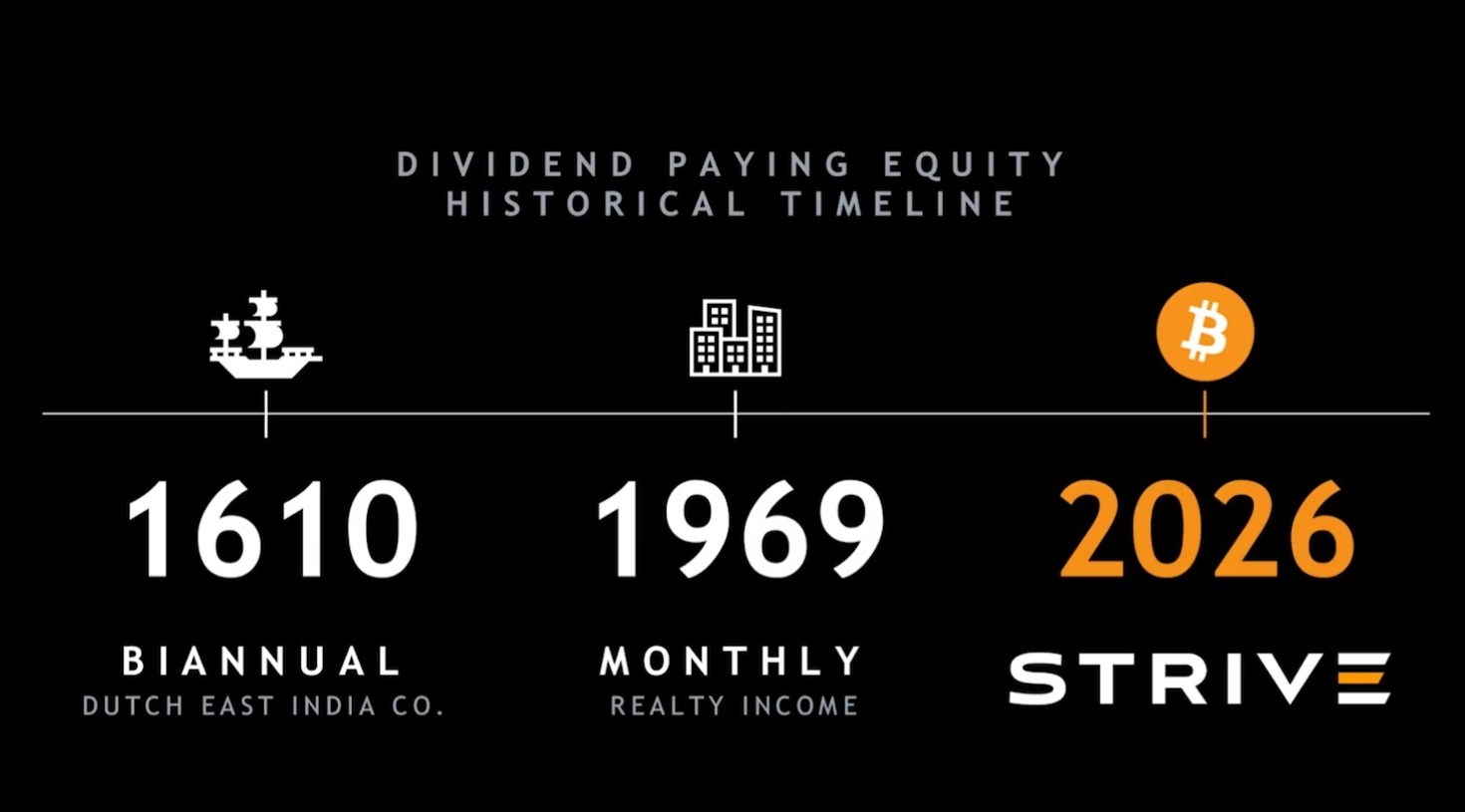
In July 2025, Strategy launched STRC — its Variable Rate Series A Perpetual Preferred Stock. The instrument raised $2.521 billion, which was immediately deployed to purchase 21,021 BTC. The shares pay an adjustable monthly dividend, currently running at approximately 10.75% annualized, with the rate adjusting to keep the price near par.
Think about what STRC is structurally. An investor buys STRC. They receive a monthly cash yield. That yield is ultimately derived from capital markets activity anchored to Strategy's Bitcoin treasury. Strategy, meanwhile, uses the STRC proceeds to buy more Bitcoin, increasing the BTC backing per unit of equity.
In Finney's language: Strategy has issued a Bitcoin-backed digital credit instrument. The credit is not redeemable one-for-one for Bitcoin today, but it is priced, managed, and backed by Bitcoin reserves. It is Bitcoin-denominated credit in all but name.
STRC was not Strategy's first foray into this space. It followed STRK and STRF, and STRD. The company now has multiple layers of preferred equity sitting above common stock and below secured debt — a capital stack being designed with Bitcoin as its gravitational center.
Table 1: Strategy Bitcoin-Backed Capital Instruments
Instrument | Type | Key Feature |
STRK | Perpetual Preferred | Fixed rate 8% (cumulative) |
STRF | Perpetual Preferred | Fixed rate 10% (cumulative) |
STRC | Variable Preferred | Adjustable dividend |
STRD | Perpetual Preferred | Fixed rate 10% (non-cumulative) |
(Source: CoinDesk / Strategy corporate filings)
Enter Metaplanet: The Bitcoin Bank of Asia
If Strategy is the pioneer in this space, Metaplanet (TSE: 3350 / OTCQX: MTPLF) is the company that is taking the model global and — in my view — has the positioning to become one of the world's first genuine Bitcoin banks. Not metaphorically. Functionally.
Let me walk through where Metaplanet stands as of Q1 2026, and then explain why I believe the trajectory points toward something much larger than most analysts currently appreciate.
Where Metaplanet Stands Today
As of March 31, 2026, Metaplanet holds 40,177 BTC — making it the third-largest corporate Bitcoin holder globally, behind Strategy and Twenty One Capital, and the largest in Asia. The company acquired 5,075 BTC in Q1 2026 alone, spending approximately $405 million at a weighted average price of around $79,898 per coin.
The company's long-term targets are ambitious: 100,000 BTC by end of 2026 and 210,000 BTC by end of 2027 — equivalent to roughly 1% of Bitcoin's total fixed supply. At current accumulation rates of approximately 55 BTC per day, the trajectory is credible, though not without execution risk.
Table 2: Metaplanet Bitcoin Accumulation Journey
Date | BTC Held | Milestone |
April 2024 | 97.85 BTC | Bitcoin Standard adopted |
Dec 2024 | 1,761 BTC | End of Year 1 |
Dec 2025 | 35,102 BTC | End of Year 2 |
Mar 2026 | 40,177 BTC | Q1 2026 (current) |
(Source: BitcoinTreasuries.net / Metaplanet corporate disclosures)
What I find analytically compelling is not just the raw accumulation numbers. It is the financial architecture being built to support that accumulation. This is where Metaplanet's story becomes truly interesting.
MARS: Metaplanet's Answer to STRC
In late 2025, Metaplanet announced MARS — the Metaplanet Adjustable Rate Security. CEO Simon Gerovich described it explicitly as Metaplanet's version of Strategy's STRC. It is a senior, non-dilutive Class A perpetual preferred equity instrument, with monthly adjustable dividends that respond to market conditions.
The MARS structure is designed to sit at the top of Metaplanet's capital stack — senior to both the Mercury (Class B) preferred shares and common equity. Non-dilutive means it does not create new common shares, preserving BTC per share for common shareholders.
Here is the elegant mechanism: the MARS dividend rate is structured to rise when the share trades below par and fall when it trades above par. This creates an automatic stabilizer — a self-correcting market mechanism that keeps the instrument near its target price without requiring management intervention.
Mercury: The Second Layer
Below MARS sits Mercury — Metaplanet's Class B perpetual preferred equity. Mercury pays a fixed 4.9% annual dividend on a ¥1,000 notional strike price, with quarterly distributions and a long-dated conversion option into common equity. The hybrid structure offers fixed-income investors yield plus asymmetric upside tied to Bitcoin's price.
Metaplanet raised $150 million through the Mercury issuance in November 2025. Critically, Michael Saylor confirmed at the Bitcoin MENA conference that Strategy would not issue preferred equity in Japan within the next 12 months — giving Metaplanet a clear runway to dominate the Japanese and potentially broader Asian Bitcoin-backed credit market.
Table 3: Metaplanet Capital Stack Structure
Layer | Instrument | Type | Priority |
Senior | MARS (Class A) | Adjustable Preferred | Highest |
Mezzanine | Mercury (Class B) | Fixed Preferred + Conversion | Middle |
Equity | Common Shares (3350) | Common Stock | Lowest |
(Source: CoinDesk / Metaplanet corporate filings)
Connecting the Dots: Finney's Vision in Metaplanet's Capital Stack
Now let me make the connection explicit, because I think it is one of the most important analytical frameworks for understanding what Metaplanet is actually building.
Hal Finney described Bitcoin-backed banks issuing digital cash redeemable for Bitcoin. He envisioned a layered monetary system with Bitcoin as the high-powered reserve and credit instruments sitting above it.
Look at what Metaplanet is constructing:
• Layer 1 — Bitcoin Reserve: 40,177+ BTC held in corporate treasury, targeting 210,000 BTC by 2027. This is the hard money base — the Bitcoin mountain peak.
• Layer 2 — Senior Credit (MARS): Non-dilutive preferred equity paying adjustable monthly yields, backed by the Bitcoin reserve. This is the first layer of Bitcoin-backed credit above the base.
• Layer 3 — Hybrid Credit (Mercury): Fixed dividend preferred with Bitcoin-linked upside and conversion rights. A bridge between fixed income and Bitcoin equity exposure.
• Layer 4 — Equity (Common Stock): Residual claim on the Bitcoin treasury, with maximum upside and maximum volatility — exactly what you would expect at the bottom of a capital stack anchored by a scarce hard asset.
This is, structurally, exactly what Finney described. An institution holding Bitcoin as its reserve asset and issuing credit instruments backed by that reserve. The credit instruments provide yield to investors. The Bitcoin treasury provides the ultimate backing. The system operates with more discipline than fiat banking because the reserve cannot be expanded at will.
In my analysis, this is not an accident. It is a deliberate architectural choice, and Metaplanet's leadership — particularly CEO Simon Gerovich and Head of Strategy Dylan LeClair — understand exactly what they are building.
Bitcoin Does Not Need to Defeat the Financial System — It Needs to Become Its Center of Gravity
This is the point that Michael Saylor's critics most consistently miss, and it is the point that connects Finney's vision to the broader thesis of this article.
Many Bitcoin maximalists have, for years, envisioned an apocalyptic transition — the old financial system collapsing, Bitcoin rising from the ashes, banks disappearing. While emotionally satisfying, this framing misunderstands how monetary systems actually evolve.
Monetary transitions in history are rarely sudden. They are gradual reorganizations. The gold standard did not end in a single dramatic moment. It eroded slowly as governments found ways to decouple currency from gold, inch by inch, decade by decade. The reverse process — the re-anchoring of finance to a hard asset — would logically follow a similar gradual path.
The Gravitational Pull Model
Here is the framework I use to think about this: imagine Bitcoin as a gravitational body in the financial solar system. Right now, it is relatively small compared to the existing financial mass. But as it grows — as more institutions hold it, as more credit is issued against it, as more prices are denominated in Bitcoin terms — its gravitational pull increases.
At some point, the financial system does not fight Bitcoin's gravity. It orbits around it. It prices assets relative to Bitcoin. It settles major obligations in Bitcoin. It issues credit backed by Bitcoin. The old institutions may still exist, but their monetary basis has shifted.
The enemy in this framework is not banks or capital markets per se. The enemy is arbitrary monetary power — the ability of governments and central banks to expand the money supply without limit, debasing savings and distorting economic calculation. Bitcoin eliminates that arbitrary power by providing a fixed monetary base that no institution can override.
Why Japan Is the Perfect Testing Ground
Metaplanet's positioning in Japan is not incidental. Japan is the most advanced case study in the world of what happens to an economy when monetary debasement becomes a permanent feature of policy. The Bank of Japan has held interest rates near or below zero for decades. The yen has weakened persistently. Japan's 10-year government bond yield remains among the lowest in the G7.
For Japanese institutional investors and households sitting on massive savings in low-yield accounts, Metaplanet's Mercury preferred shares offering 4.9% annual dividends backed by Bitcoin reserves are genuinely attractive. Metaplanet has explicitly identified Japan's ¥7.5 trillion household savings pool — earning near-zero returns — as the capital reservoir it is targeting.
Think about the implication of that. Japanese savers, frustrated by decades of near-zero returns, are now being offered a structured product that gives them Bitcoin-linked yield. They are, in Finney's language, holding Bitcoin-backed digital credit. The financial system in Japan is beginning to orbit Bitcoin's gravity.
Metaplanet as a Bitcoin Bank: The Case in Full
Let me now make the full case for why Metaplanet could become one of the world's first genuine Bitcoin banks, in the tradition Hal Finney described.
1. It Has the Bitcoin Reserve
A bank, at its most fundamental level, is an institution that holds reserves and issues credit against those reserves. Metaplanet is building the reserve. 40,177 BTC today, targeting 210,000 BTC by 2027. At current prices, that represents a reserve base in the billions of dollars — and more critically, a reserve base measured in Bitcoin per share, the metric that actually matters for shareholders.
2. It Is Issuing Bitcoin-Backed Credit
MARS and Mercury are Bitcoin-backed credit instruments in functional terms. They are backed by Metaplanet's Bitcoin reserve. They pay yields derived from capital market activity anchored to that reserve. Investors buying these instruments are purchasing digital credit in the Finney tradition.
3. It Has an Operational Revenue Engine
Unlike a pure Bitcoin holding vehicle, Metaplanet has a functioning Bitcoin income generation business — primarily through options strategies on its Bitcoin holdings. This revenue stream is self-reinforcing: the larger the Bitcoin reserve, the larger the options book, the more revenue generated, and the more BTC that can be acquired.
By Q2 2025, Bitcoin income generation accounted for 91.2% of total company revenue. This is not a company that passively holds Bitcoin. It actively monetizes its reserve, exactly as a bank monetizes its assets through lending and investment.
4. It Has a Clear Geographic Monopoly
With Strategy explicitly declining to issue preferred equity in Japan for at least 12 months, Metaplanet has a clear window to establish itself as the dominant Bitcoin-backed credit issuer in Asia. Japan's regulatory framework, its massive yield-starved savings pool, and its sophisticated capital markets all make it an ideal launching pad for the Bitcoin banking model.
5. It Is Managed With Bitcoin-Denominated Thinking
Perhaps most importantly, Metaplanet's management measures everything in Bitcoin terms. The core KPI is BTC Yield — the percentage growth in Bitcoin holdings per fully diluted share. Every capital markets decision is evaluated through the lens of: does this increase BTC per share?
This is a fundamentally different and, in my view, superior framework to managing a company in fiat terms. It keeps the team disciplined, ensures that capital is allocated only when it is genuinely accretive, and aligns shareholder incentives perfectly with the long-term Bitcoin accumulation strategy.
What the Critics Get Wrong About Saylor — And About Metaplanet
I want to spend a moment addressing the critics directly, because I think their objections, while superficially reasonable, rest on a fundamental misunderstanding of the strategy.
The most common criticism goes something like this: 'These companies are using leverage and dilution to buy a volatile asset. If Bitcoin crashes, they blow up.'
This criticism treats Bitcoin as just another speculative asset — a high-beta bet that will eventually revert to the mean. If you hold that view, then yes, these strategies look reckless.
But the thesis of Finney's vision — and the thesis of this article — is that Bitcoin is not just another asset. It is the emerging monetary base layer. It is the new high-powered money. And companies that accumulate it now, while it is still relatively early, are positioning themselves as the reserve institutions of a future monetary system.
The Leverage Argument
On leverage, the key analytical point is this: the type of leverage matters enormously. Metaplanet's preferred equity structures are designed to be non-dilutive to common shareholders and structured with adjustable dividends — meaning they are not rigid debt obligations that blow up in a downturn. They are more sophisticated than simple debt, and they are calibrated to Bitcoin's volatility profile.
Moreover, the mNAV (multiple of Net Asset Value) at which these companies trade tells an important story. When Metaplanet's mNAV trades above 1x, it signals that the market values the management platform — the capital markets machinery — above and beyond the raw Bitcoin holdings. That premium is justified precisely because the company can issue credit, generate yield, and accumulate more Bitcoin than a passive holder could.
As of early 2026, with Metaplanet trading near or below its Bitcoin NAV, the market is arguably pricing in significant downside that I think underestimates the long-term positioning of the company. A company that is the dominant Bitcoin-backed credit issuer in Asia deserves a premium to NAV, not a discount.
The Road Ahead: What a Bitcoin Bank Actually Looks Like
Let me close this analysis by sketching what Metaplanet could look like in five to ten years if Finney's vision continues to unfold.
Phase 1: Reserve Accumulation (Current)
Metaplanet accumulates Bitcoin as aggressively as possible, using every available capital markets tool — equity, warrants, zero-interest bonds, preferred equity. The goal is to build the largest possible Bitcoin reserve base in Asia. Every BTC added to the treasury is a permanent, inflation-proof reserve asset that cannot be debased.
Phase 2: Credit Issuance at Scale
With a substantial Bitcoin reserve (100,000+ BTC), Metaplanet can issue Bitcoin-backed credit instruments at scale — not just to institutional investors but potentially to retail savers across Japan and Asia. Japan's ¥7.5 trillion household savings pool, currently earning near-zero returns, represents the addressable market.
At this stage, Metaplanet begins to look like a genuine financial institution — holding Bitcoin reserves and issuing structured products backed by those reserves. This is Hal Finney's Bitcoin bank, realized in practice.
Phase 3: Settlement and Infrastructure
The most speculative but most important phase involves Metaplanet participating in Bitcoin settlement infrastructure — potentially operating nodes, facilitating large BTC transfers between institutions, and acting as a Bitcoin custodian for other corporate and institutional clients. Project NOVA, described in Metaplanet's strategic materials as the 'gateway to everything BTC in Japan,' hints at this direction.
In Finney's model, most Bitcoin transactions eventually occur between banks to settle net transfers. Metaplanet, as the largest Bitcoin-holding institution in Asia, is naturally positioned to be one of those settlement banks.
The Bitcoin Standard: When Gravity Wins
At some point — and I cannot tell you exactly when — Bitcoin's gravitational pull becomes irresistible for the financial system. When enough institutions hold Bitcoin reserves. When enough credit is priced in Bitcoin terms. When enough savings are channeled into Bitcoin-backed instruments. At that point, the financial system does not fight Bitcoin. It prices everything relative to it.
The old system does not vanish. It transforms. Banks still exist, but they hold Bitcoin reserves. Bonds still exist, but they are priced against Bitcoin's yield. Currencies still exist, but they are evaluated relative to their Bitcoin exchange rate. This is the world Finney described. And in my analysis, it is the world that is beginning to form around us.
Final Thoughts
Hal Finney was not a dreamer. He was an engineer who thought rigorously about systems. When he described Bitcoin as the high-powered money of the future — the reserve asset behind a new layer of Bitcoin-backed credit — he was making a precise, well-reasoned prediction based on monetary history and the logic of Bitcoin's design.
That prediction is now materializing. Strategy's STRC, Metaplanet's MARS and Mercury, the emerging ecosystem of Bitcoin-backed credit — these are not detours from the Bitcoin thesis. They are the Bitcoin thesis being expressed in the language of capital markets.
Metaplanet, in my analysis, is the most compelling expression of this thesis outside of the United States. It holds the largest corporate Bitcoin reserve in Asia. It is building the capital markets infrastructure to issue Bitcoin-backed credit at scale. It has a ready market in Japan's yield-starved savers. And it has a 12-month window of strategic exclusivity in its home market, with Strategy's own chairman confirming he will not compete there in the near term.
The critics who mock Michael Saylor are watching the wrong movie. The real story is not one man's bet on Bitcoin. The real story is the slow, powerful, inevitable process by which Bitcoin becomes the gravitational center of global finance. Metaplanet is not just a Bitcoin treasury company. It is positioning to be one of the world's first Bitcoin banks — and Hal Finney described exactly this moment, fifteen years ago, on a forum that most people have never read.
The question for investors, analysts, and institutions is not whether this transformation will happen. In my view, the question is whether they will recognize it early enough to position accordingly.
Thank you for reading this insight and I hope you found it helpful. Check the latest prices of Metaplanet quoted on different exchanges at the link below:
Disclaimer:
This article reflects my personal research and opinions and is for informational purposes only. It is not financial advice. I may be wrong, and markets are inherently risky. Always do your own due diligence and consult a licensed financial advisor before making any investment decisions.